Paris Summit
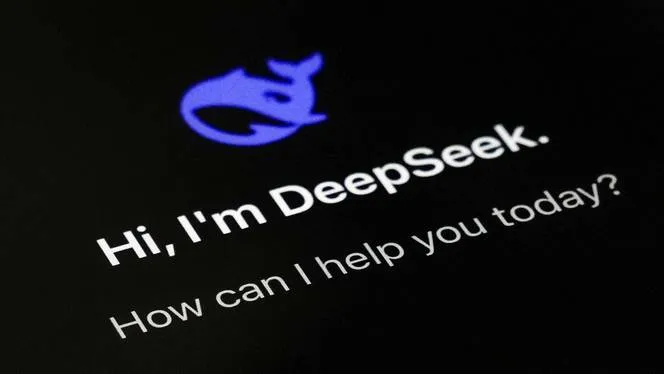
As global leaders, tech executives, academics, and experts prepare to converge on Paris for a high-stakes summit on artificial intelligence (AI), the atmosphere is charged with anticipation. Against the opulent backdrop of the city’s iconic Grand Palais, representatives from 80 countries will gather for the two-day Artificial Intelligence Action Summit to discuss the current state of AI and chart a course for its future. While the official agenda focuses on progress and goals, there’s an undercurrent of urgency driven by recent developments—most notably, China’s unveiling of DeepSeek, a groundbreaking AI assistant that has sent shockwaves through the tech world.
DeepSeek, celebrated for its efficiency and viral appeal, has shifted the narrative around AI competition. For years, the United States has dominated the field, buoyed by its deep pockets, cutting-edge infrastructure, and Silicon Valley giants like Google, Meta, and OpenAI. But China’s latest innovation suggests that American supremacy may not be as unassailable as once thought. As one horse racing enthusiast aptly put it: “The night before a big race, everyone’s a winner.” And right now, many nations are eyeing the starting line with renewed optimism.
Vacuum of Global Leadership
Professor Gina Neff of the Minderoo Centre for Technology and Democracy at the University of Cambridge describes the current state of global AI governance as a “vacuum for leadership.” This sentiment is echoed by Dame Wendy Hall, a prominent computer scientist from the University of Southampton, who notes that DeepSeek has forced the world to recognize China as a formidable player in the AI arena.
“We don’t have to simply follow what the big companies on the West Coast dictate,” says Hall. “This moment calls for genuine global dialogue.”
The timing of the summit couldn’t be better. With geopolitical tensions rising and technological advancements accelerating, the need for international cooperation has never been more pressing. Yet, beneath the surface, rivalries simmer. Europe, too, sees an opportunity to assert itself in the AI race. French President Emmanuel Macron’s administration has framed the event as a “wake-up call” for France and the European Union, urging them not to let the AI revolution pass them by.
Other nations are equally keen to seize the moment. Indian Prime Minister Narendra Modi, who skipped previous summits, has confirmed his attendance, signaling India’s growing interest in positioning itself as a key player in the AI landscape. Meanwhile, the United States is sending heavy hitters, including Vice President JD Vance, OpenAI CEO Sam Altman, and Google’s Sundar Pichai—a clear defensive move to reinforce America’s dominance.
Elon Musk, though conspicuously absent from the official guest list, remains a wildcard. Known for his outspoken views on AI, he is likely to weigh in regardless of whether he attends in person. Similarly, British Prime Minister Keir Starmer’s decision to stay away raises questions about the UK’s priorities amid this pivotal juncture.
From Bletchley Park to Paris: Shifting Dynamics
Much has changed since the first AI summit was held at Bletchley Park in November 2023. Back then, delegates pledged to maximize AI’s benefits while minimizing its risks. Since then, nearly half the world’s population has gone to the polls, underscoring the technology’s far-reaching implications for democracy and society. At Bletchley, China’s Vice Minister for Science and Technology, Wu Zhaohui, attended but was reportedly kept at arm’s length due to national security concerns. In Paris, however, China is expected to take center stage, with senior leader Ding Xuexiang—a close ally of President Xi Jinping—leading the delegation. Speculation swirls over whether Liang Wenfeng, the creator of DeepSeek, will join him.
DeepSeek’s emergence has reignited debates about the true cost and feasibility of building competitive AI systems. While some, like Anthropic CEO Dario Amodei, question whether DeepSeek was developed as cheaply as claimed, others point out that it leveraged existing technologies, such as Nvidia chips (likely older models due to U.S. sanctions) and open-source architectures from Meta. Ironically, OpenAI itself has accused competitors of using its work to advance their projects—a charge that has amused some in the creative industries, given OpenAI’s own penchant for mimicking individual creators’ styles.
Regardless of the specifics, DeepSeek’s impact cannot be overstated. It disrupted the market, eroded billions in value from leading AI firms, and injected fresh uncertainty into the global race for AI supremacy. Its influence will undoubtedly dominate discussions in Paris.
Safety vs. Innovation: Striking a Balance
While the summit promises to address a wide array of AI applications—from generative tools like DeepSeek and ChatGPT to medical diagnostics, climate modeling, and drug discovery—one recurring theme looms large: safety. The inaugural summit in the UK placed significant emphasis on existential threats posed by advanced AI, alarming some participants with dire warnings. Though the tone has softened somewhat, safety remains a critical issue.
Geoffrey Hinton, often hailed as one of the “godfathers of AI,” distinguishes between short-term risks—such as misinformation, bias, discrimination, and autonomous weapons—and the long-term specter of superintelligent AI surpassing human control. He likens the latter scenario to the Cold War era, when the U.S. and Soviet Union narrowly avoided nuclear catastrophe through cautious collaboration.
“Nobody wants AI to take over,” Hinton asserts. “Not even China would prefer AI to govern instead of the Communist Party.”
Max Tegmark, founder of the Future of Life Institute, echoes this concern, warning of a stark dichotomy: “Either we develop amazing AI that helps humanity, or uncontrollable AI that replaces us.” He advocates for binding safety standards akin to those in other critical industries, emphasizing that humanity is closer to creating powerful AI than to mastering its control.
As delegates descend upon Paris, the stakes could not be higher. Will the summit foster meaningful collaboration, or will it devolve into a platform for posturing and rivalry? Can the EU maintain its commitment to ethical AI without stifling innovation? And how will the rise of players like China reshape the global balance of power?
One thing is certain: the decisions made—or avoided—in Paris will reverberate far beyond the conference halls, shaping the trajectory of AI development for decades to come.
Technology editor: Z Kleinman